Handling the Spotlight: Public Pressure and Athletic Performance
Key Points
Public expectation and media scrutiny can impair performance by increasing anxiety and cognitive overload.
Media narratives can shift athlete identity, increasing the fear of failure and identity pressure.
Strategies like reframing pressure, self-talk, and social support enhance mental resilience under public gaze.
Mental Performance Coaches help athletes prepare for and navigate media demands without compromising focus or well-being.
What to Consider When Reading
How does media attention—whether positive or negative—affect your focus, identity, or motivation?
Can you identify which spotlight management tools you’re already using, and where you might need more support?
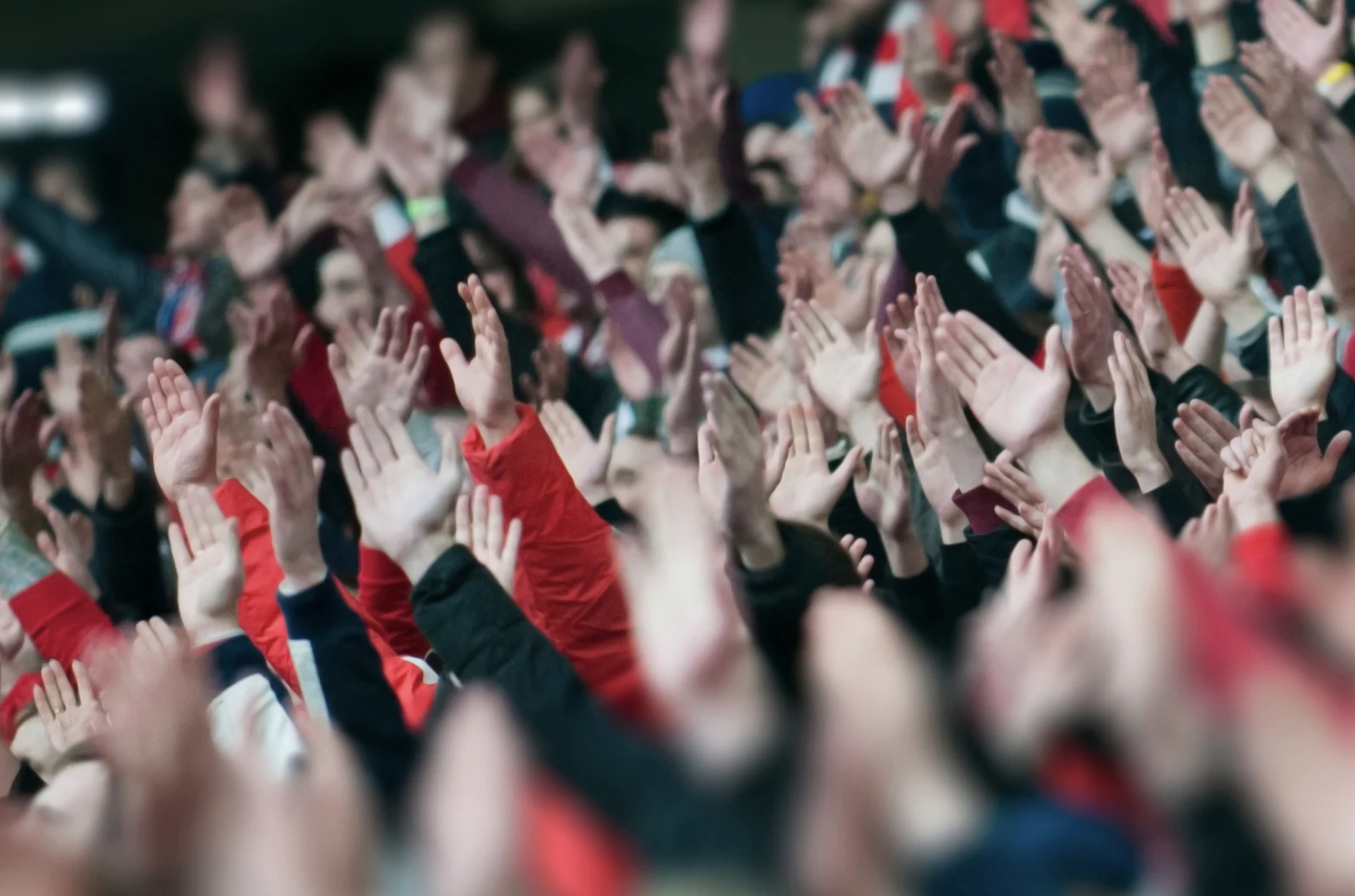
The roar of the crowd, the glare of cameras, the endless stream of headlines—athletes today don’t just compete on the field; they compete under the watchful eye of millions. Media pressure and public expectations can fuel performance and boost their athletic persona, but they can also create overwhelming stress. Understanding how to handle this spotlight is key to sustaining mental resilience in sport.
This blog unpacks how the spotlight of media attention shapes athletic performance: the psychological weight of public expectation, the constant evaluation from social media, and how athletes can build mental resilience in sport to not just withstand, but thrive under that pressure. We’ll also explore real stories from athletes who’ve faced the spotlight head-on—and the strategies that helped them cope.
As Naomi Osaka (2021) once said after withdrawing from the French Open: “I feel like people have no regard for athletes’ mental health, and this rings true whenever I see a press conference or partake in one.” Her words remind us that behind every headline is a human being learning to balance performance with the pressure of public attention.
The Weight of Public Expectation
When fans, commentators, and entire nations expect victory, every mistake can feel magnified. Psychologists call this evaluation apprehension—the anxiety that arises when we know we’re being judged. This form of pressure doesn’t just create nerves; it alters brain function. Studies show that perceived expectation heightens cognitive load, reduces working memory capacity, and interferes with motor execution, especially in high-stakes moments (Mesagno & Beckmann, 2017; Beilock & Carr, 2001). In other words, the more athletes worry about how they’re seen, the harder it becomes to stay present and perform instinctively.
Research also highlights how media narratives intensify this pressure. Coverage often frames athletes as heroes, role models, or national symbols. While this can elevate status, it also creates an externalized sense of self—athletes begin performing not only for themselves but to “live up” to a constructed public image (Kristiansen, Halvari, & Roberts, 2012). This shift in identity magnifies the fear of failure, making mistakes feel like personal or national betrayals rather than learning opportunities.
The impact is visible at the highest level. Simone Biles’s choice to step back at the Tokyo Olympics wasn’t about physical readiness—it was about the psychological toll of global expectations (BBC Sport, 2021. Her decision shone a spotlight on how relentless scrutiny can compromise even the most dominant athletes, underscoring the need for coping strategies that protect mental resilience under the public gaze.
The Media Spotlight Effect
From post-game interviews to viral social clips, athletes today are under a constant microscope. Social media amplifies this—every missed shot or mistake is replayed, dissected, and judged.
While positive coverage can boost confidence, constant scrutiny, commentary, or negative headlines often leads to a lack of motivation, overthinking, and an obsession with what others think—pulling attention away from the real purpose of the game. Tennis star Naomi Osaka highlighted this when she withdrew from the French Open, explaining that media obligations were a major trigger for her mental health struggles.
The Real-Life Effect of Media Pressure in Sport
72% of elite athletes report experiencing heightened anxiety when competing under media scrutiny (Kristiansen, Roberts, & Abrahamsen, 2012).
Performance choke effect: Athletes under public expectation show reduced working memory and impaired decision-making in clutch moments (Beilock & Carr, 2001).
Social media stress: Constant online commentary can amplify fear of failure and damage self-confidence (Sheridan, Coffee, & Lavallee, 2021).
Identity pressure: Media framing can push athletes to align with public labels—“hero,” “warrior,” or “role model”—which increases evaluation apprehension (Mesagno & Beckmann, 2017).
The evidence is clear: media narratives and public scrutiny don’t just influence reputation—they directly impact performance, focus, and mental resilience.
Building Mental Resilience in the Public Eye
So, how can athletes handle the weight of constant public evaluation without letting it crush their love of the game. With the right tools from sport psychologists, the spotlight doesn’t have to weigh you down—it can actually fuel your performance
1. Reframe the Spotlight
Instead of treating media attention like a trap, try flipping the script: it’s a platform. Research shows that when athletes see pressure as a challenge instead of a threat, they perform with more stable heart rates, better focus, and greater consistency (Jones et al., 2009).
Think of how LeBron James handles press conferences—he doesn’t just answer questions, he uses the moment to tell his story, set the narrative, and remind people why he loves the game. Before stepping into the camera, try a quick reframe: “This is my chance to share my journey, not a test of my worth.”
2. Set Boundaries With the Mic
Boundaries aren’t weakness—they’re fuel-saving. Athletes know that mental focus is like a battery: if you let everyone plug in, it drains fast. That’s why many set “media blackout” periods before competitions. It’s not about ignoring fans or being closed off—it’s about protecting the limited energy needed for peak performance.
Think of it this way: sprinters don’t run extra laps right before their race, and athletes shouldn’t burn mental energy on constant interviews, DMs, or headlines before a big game. Setting boundaries creates space to recharge, reset, and keep performance sharp when it matters most.
Serena Williams has spoken openly about this balance—how saying “no” to certain media requests isn’t selfish, it’s strategic. Boundaries allow athletes to stay grounded, preserve focus, and compete with clarity.
3. Talk Back to the Noise
Headlines can be loud—but your own voice has to be louder. The danger isn’t just the criticism itself; it’s when that outside noise seeps in and reshapes your self-beliefs. Once you start internalizing “choker,” “overrated,” or “not clutch,” it can chip away at confidence and even dictate performance.
That’s why athletes train their inner voice just as deliberately as their physical skills. Self-talk isn’t just a motivational poster phrase—it’s a proven strategy to rewire how you interpret pressure.
Cue words like “steady,” “next play,” or “control the controllables” act as mental anchors. They cut through the chaos, bringing you back to the present moment instead of spiraling into doubt. Think of LeBron James repeating “I’m built for this” before Game 7s, or swimmers whispering “smooth and strong” behind the blocks—it’s not superstition, it’s psychology.
The key is consistency. The more you practice self-talk in training, the more automatic it becomes when the spotlight is hottest. Instead of letting headlines define you, you define yourself—louder, clearer, and stronger.
4. Lean on Your People
No athlete is an island. Behind every top performer is a team—coaches, teammates, friends, family, and often sport psychologists—who help buffer the weight of the spotlight.
Research backs this up: strong social support not only reduces the emotional toll of public scrutiny but also strengthens an athlete’s ability to regulate emotions under stress (Rees & Hardy, 2004). Just look at Simone Biles in Tokyo—her decision to prioritize her mental health wasn’t made alone. She leaned on her coaches, teammates, and USA Gymnastics staff to step back safely and return stronger.
Key Takeaway
At the end of the day, athletes can’t control the spotlight—but they can control how they show up in it. By reframing media pressure, setting boundaries, using self-talk, and leaning on support systems, athletes build real mental resilience in sport. The goal isn’t to block out the world—it’s to remember why you play, keep perspective, and let purpose shine brighter than public judgment.
How a Mental Performance Coach Can Help
A Mental Performance Coach (MPC) helps athletes filter out noise, manage expectations, and build resilience under scrutiny. By reinforcing techniques like reframing pressure, practicing guided self-talk, and setting healthy media boundaries, a mental performance coach ensures the spotlight sharpens rather than shatters performance.
Prepping with a Mental Performance Coach
1. Cue Words as Anchors
Short, powerful phrases like “steady,” “next play,” or “control the controllables” are practiced until they become automatic under pressure. They cut through the chaos and reset focus in the moment. For example, swimmers often repeat “smooth and strong” behind the blocks, while NBA players might use “lock in” before free throws.
2. Cognitive Reframing
Instead of absorbing negative headlines as “proof” of weakness, athletes are coached to reframe them as challenges. “They doubt me” becomes “I get to prove myself.” Research shows reframing pressure as a challenge boosts both physiological stability (like heart rate) and performance (Jones et al., 2009).
3. Self-Compassion Training
MPCs often remind athletes that mistakes don’t define them. Self-compassion practices—like journaling after games or guided reflections—help athletes separate performance from identity. Simone Biles has spoken openly about this mindset: being more than her medals kept her grounded during tough moments.
4. Mental Imagery Under Scrutiny
Athletes visualize not only their ideal performance, but also being in the spotlight—fielding tough questions, hearing boos, or seeing critical tweets—and rehearse responding calmly. This way, the real spotlight feels familiar instead of threatening.
5. Controlled Exposure
Just like training muscles, resilience to criticism can be built gradually. MPCs sometimes create “safe” scenarios where athletes are exposed to simulated tough questions or even read harsh comments, practicing how to respond without spiraling.
Working with a mental coach isn’t just about learning to survive the spotlight—it’s about thriving in it. The real win is training athletes to trust their own voice above the crowd, no matter how loud the noise gets.
References
BBC Sport. (2021, July 27). Tokyo Olympics: Simone Biles says she withdrew from team final to protect mental health. BBC Sport. https://www.bbc.com/sport/olympics/57984680
Beilock, S. L., & Carr, T. H. (2001). On the fragility of skilled performance: What governs choking under pressure? Journal of Experimental Psychology: General, 130(4), 701–725. https://doi.org/10.1037/0096-3445.130.4.701
Cacciola, S. (2018, June 8). LeBron James has mastered the art of the press conference. The New York Times. https://www.nytimes.com/2018/06/08/sports/basketball/lebron-james-nba-finals.html
Hatzigeorgiadis, A., Zourbanos, N., Galanis, E., & Theodorakis, Y. (2011). Self-talk and sports performance: A meta-analysis. Perspectives on Psychological Science, 6(4), 348–356. https://doi.org/10.1177/1745691611413136
Jones, M. V., Meijen, C., McCarthy, P. J., & Sheffield, D. (2009). A theory of challenge and threat states in athletes. International Review of Sport and Exercise Psychology, 2(2), 161–180. https://doi.org/10.1080/17509840902829331
Kristiansen, E., Roberts, G. C., & Abrahamsen, F. E. (2012). Achievement involvement and stress coping in elite sport. Scandinavian Journal of Medicine & Science in Sports, 22(5), 679–687. https://doi.org/10.1111/j.1600-0838.2011.01336.x
Macur, J. (2021, July 28). Simone Biles withdraws from Olympic event, citing mental health. The New York Times. https://www.nytimes.com/2021/07/28/sports/olympics/simone-biles-mental-health.html
Mesagno, C., & Beckmann, J. (2017). Choking under pressure: Theoretical models and interventions. Current Opinion in Psychology, 16, 170–175. https://doi.org/10.1016/j.copsyc.2017.05.015
Osaka, N. (2021, May 26). Personal statement on French Open press commitments [Press release]. BBC Sport. https://www.bbc.com/sport/tennis/57263485
Rees, T., & Hardy, L. (2004). Matching social support with stressors: Effects on factors underlying performance in tennis. Psychology of Sport and Exercise, 5(3), 319–337. https://doi.org/10.1016/S1469-0292(03)00018-9
Schinke, R. J., Stambulova, N. B., Si, G., & Moore, Z. (2018). International society of sport psychology position stand: Athletes’ mental health, performance, and development. International Journal of Sport and Exercise Psychology, 16(6), 622–639. https://doi.org/10.1080/1612197X.2017.1295557
Sheridan, D., Coffee, P., & Lavallee, D. (2021). A systematic review of social media use and its impact on athlete well-being and performance. Psychology of Sport and Exercise, 52, 101832. https://doi.org/10.1016/j.psychsport.2020.101832
Williams, S. (2018, May 30). Serena Williams: What my life-threatening experience taught me about giving birth. CNN Opinion. https://www.cnn.com/2018/02/20/opinions/serena-williams-motherhood/index.html